

Tooth Extraction in Swiss Cottage
Stress-Free Tooth Removal
SURGICAL EXPERTISE
Expert Surgical Extractions in Swiss Cottage
Many extractions are straightforward, but complex surgical removals call for a higher level of clinical precision. At London Smile Studio, our surgical team is led by Dr Shimon Dantsis (GDC: 249447), who focuses on impacted wisdom teeth, fractured roots, and teeth that need careful bone preservation for future dental implants. Serving Swiss Cottage, Hampstead and the wider NW3 area, we use 3D CBCT imaging to map the position of nerves and roots before treatment — so your procedure is planned in detail and carried out as conservatively as possible.
Relieves Pain
Relieves pain caused by severe tooth damage or infection
Prevents Infection
Prevents the spread of infection to surrounding teeth and tissues
Improves Oral Health
Improves oral health by removing problematic teeth
Restorative Treatments
Prepares your mouth for restorative treatments like implants or braces
WHAT TO EXPECT
How We Approach Tooth Extraction
An extraction is usually the last step we consider, once a filling, crown or root canal is no longer a realistic way to save the tooth. Before recommending removal, we assess whether it’s genuinely the right pathway for your long-term oral health — and if it is, we explain why, what the procedure involves, and what your options are for replacing the tooth afterwards.
We know extractions make people anxious, so comfort drives how we work. The area is fully numbed before we begin, most patients feel firm pressure and movement rather than pain, and we check in with you throughout. We also work to preserve as much of the surrounding bone as possible, which matters if you’re considering a dental implant later on.
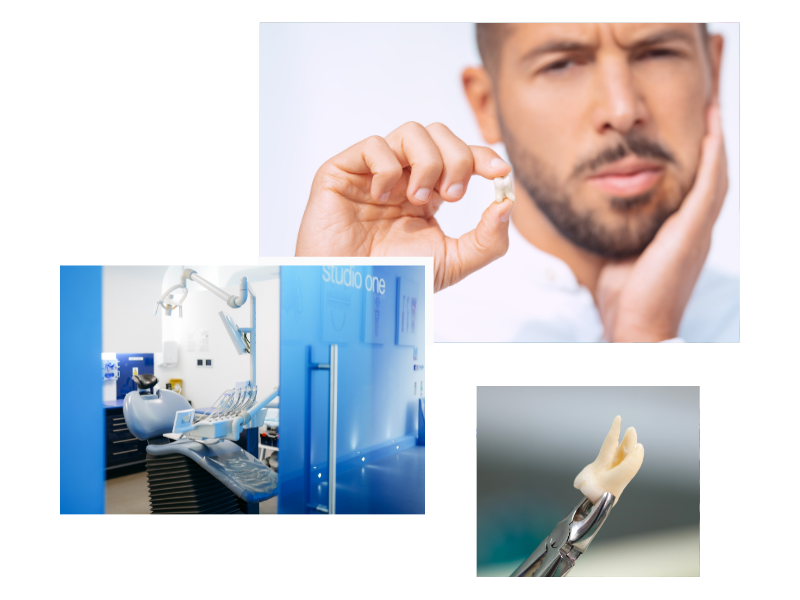
EXTRACTION TYPES
Types of Tooth Extraction in swiss cottage
-
Simple Extraction:
Used when the tooth is fully visible above the gumline and its roots are a straightforward shape. After numbing the area, we loosen the tooth within its socket and lift it out — no incision is needed. Most simple extractions take around 20–30 minutes from start to finish, and initial healing is usually comfortable within a few days. -
Surgical Extraction:
Needed when a tooth is broken at the gumline, impacted, or hasn't fully erupted. This involves a small incision in the gum to reach the tooth, and sometimes dividing it into sections so it can be removed with less disturbance to the surrounding bone. Stitches are often placed afterwards. It's a longer appointment, and recovery typically takes a little more time than a simple extraction. -
Wisdom Tooth Removal:
Wisdom teeth sit at the very back of the jaw and frequently come through at an angle or become trapped against the tooth in front. Because their roots can sit close to major nerves, we plan these cases using 3D CBCT imaging before treatment. Some are straightforward; others are fully impacted and need a surgical approach. [Link: wisdom tooth removal page]
WHAT TO EXPECT
The Tooth Extraction Process, Step by Step
Initial Consultation
Initial Consultation
X-Ray or 3D CBCT Scan
X-Ray or 3D CBCT Scan
Numbing the Area
Numbing the Area
Removing the Tooth
Removing the Tooth
Aftercare and Recovery
Aftercare and Recovery
Replacing the Tooth
Replacing the Tooth
Need a Tooth extraction?
Don’t hesitate to contact London Smile Studio, our team is here to help you through the process
london smile studio
frequently asked questions
At London Smile Studio, we prioritise a completely pain-free experience for both simple and surgical extractions. Our Swiss Cottage surgery uses advanced local anaesthesia techniques to ensure the treatment area is entirely numb before we begin.
During a surgical removal, such as an impacted wisdom tooth, it is normal to feel a sensation of pressure as the tooth is gently luxated, but you should not feel any sharp pain. We utilise precision instrumentation designed to minimise trauma to the surrounding gum and bone, which significantly reduces post-operative discomfort. If you are feeling particularly anxious about your procedure, our Finchley Road team is highly experienced in supporting nervous patients to ensure a calm and stress-free visit. To discuss your concerns with our clinical team, please call 020 7722 0303.
Recovery times vary depending on whether you have had a simple or a surgical tooth extraction. For a standard removal at our Swiss Cottage clinic, most patients feel back to normal within 48 to 72 hours. However, a surgical procedure involving the jawbone or gum tissue typically requires a 7 to 10-day healing period.
During the first 24 hours, it is vital to allow a stable blood clot to form in the socket to prevent a ‘dry socket’, a common but avoidable complication. Our NW3 clinical team will provide you with a sterile gauze pack and bespoke post-operative instructions to manage any minor swelling. While the initial soft tissue heals quickly, the underlying bone in the extraction site will continue to regenerate over the following 3 to 6 months. If you have any concerns during your recovery, our Finchley Road team is available for advice on 020 7722 0303.
While most surgical extractions at London Smile Studio heal without any issues, it is important to monitor the site closely for the first 48 hours. A common but manageable complication is a ‘dry socket,’ which occurs if the protective blood clot is dislodged from the extraction site. This typically presents as a dull, throbbing pain that starts two to three days after your appointment.
Other signs that require a clinical assessment at our Swiss Cottage surgery include persistent bleeding that does not stop with firm pressure, severe swelling that increases after the third day, or a high temperature. If you experience any of these symptoms, our NW3 clinical team is here to support you. We provide every patient with a direct contact number for peace of mind. If you are concerned about your recovery, please call our Finchley Road clinic immediately on 020 7722 0303.
Choosing the right foods is essential to protect the extraction site and encourage a swift recovery. For the first 24 to 48 hours following your procedure at our Swiss Cottage clinic, we recommend sticking to soft, cool foods. Options such as Greek yoghurt, blended soups, mashed potatoes, and smoothies are ideal as they require no chewing and won’t dislodge the healing blood clot.
You should strictly avoid hot drinks, spicy foods, or anything with small seeds that could become trapped in the socket. It is also vital that you do not use a straw, as the suction can lead to a dry socket. As your healing progresses over the next few days, you can gradually reintroduce firmer foods to your diet. If you have any questions about your dietary requirements during your recovery in NW3, our Finchley Road team is always available to help on 020 7722 0303.